
Mariana Melo Pereira represents the Southeast region in this initiative that encourages female participation in science
Mariana Melo Pereira, a first-year student at the Ilum School of Science, the undergraduate degree program at the Brazilian Center for Research in Energy and Materials (CNPEM), was selected to represent the Southeast region of the country as part of the 2025 CAPES Future Scientists Awards, one of the most important national initiatives to foster female participation in science.
Mariana, a student from Campinas, is one of an elite group of young women recognized for their academic trajectory and engagement in research activity and scientific training.
The award is granted by the Coordination for the Improvement of Higher Education Personnel (CAPES) to the female students, teachers and tutors who participate in the Future Scientists Program, in a partnership with the Northeast Center for Strategic Technology (CETENE). The “student” category included young women admitted to public universities. The ENEM high school examination score was used as the final criterion to classify the winner for each region.
“I was very surprised and pleased. When I stopped to think about how many girls there are in the Southeast, and I saw my name listed as a representative, it was incredible,” said Mariana, who was participating in the Future Scientists Program in 2024 when she learned about Ilum and CNPEM. The program sparked her interest in pursuing her bachelor’s degree in science and technology at the Ilum School of Science.
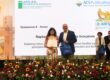
During the awards ceremony (which was held online), CAPES president Denise Pires de Carvalho reinforced the importance of continuing to encourage women and minorities to enter the world of science. “So we can bring the voice of science to communities, indigenous peoples and all of Brazil. This is the only way Brazilian science be continue to progress. It is essential that we continue not only granting the planned awards, but also expanding the number of prizes.”
“Programs like Future Scientists are essential so that we girls can belong in science. They show that we are capable and that a woman’s place is wherever she wants to be,” said Mariana, who is concluding the first year of her undergraduate program at Ilum.
About the Ilum School of Science
Ilum offers a free undergraduate degree program that utilizes an interdisciplinary approach to train scientists and professionals in science and technology. With an innovative educational model, the three-year full-time bachelor program offers courses that connect life sciences, materials science, data science, artificial intelligence, and the humanities in order to prepare researchers to work in an ethical and collaborative manner in the search for solutions to the global challenges of the twenty-first century. The Ilum School of Science is funded by the Brazilian Ministry of Education (MEC) and is part of the Brazilian Center for Research in Energy and Materials (CNPEM) in Campinas, São Paulo, a social organization overseen by the Ministry of Science, Technology, and Innovation (MCTI). Ilum’s educational mission offers early contact with experimental activities, in teaching labs at the school as well as at CNPEM, in projects carried out together with researchers.
About CNPEM
The Brazilian Center for Research in Energy and Materials (CNPEM) is home to a state-of-the-art, multi-user and multidisciplinary scientific environment and works on different fronts within the Brazilian National System for Science, Technology and Innovation. A social organization overseen by the Ministry of Science, Technology and Innovation (MCTI), CNPEM is driven by research that impacts the areas of health, energy, renewable materials, and sustainability. It is responsible for Sirius, the largest assembly of scientific equipment constructed in the country, and is currently constructing Project Orion, a laboratory complex for advanced pathogen research. Highly specialized science and engineering teams, sophisticated infrastructure open to the scientific community, strategic lines of investigation, innovative projects involving the productive sector, and training for researchers and students are the pillars of this institution that is unique in Brazil and able to serve as a bridge between knowledge and innovation. CNPEM’s research and development activities are carried out through its four National Laboratories: Synchrotron Light (LNLS), Biosciences (LNBio), Nanotechnology (LNNano), Biorenewables (LNBR), as well as its Technology Unit (DAT) and the Ilum School of Science — an undergraduate program in Science and Technology supported by the Ministry of Education (MEC).