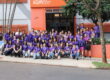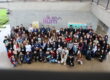
Leonardo Barchini visited laboratories, talked with students, and stated that the integration of theory and practice makes the School of Science a benchmark for higher education in Brazil
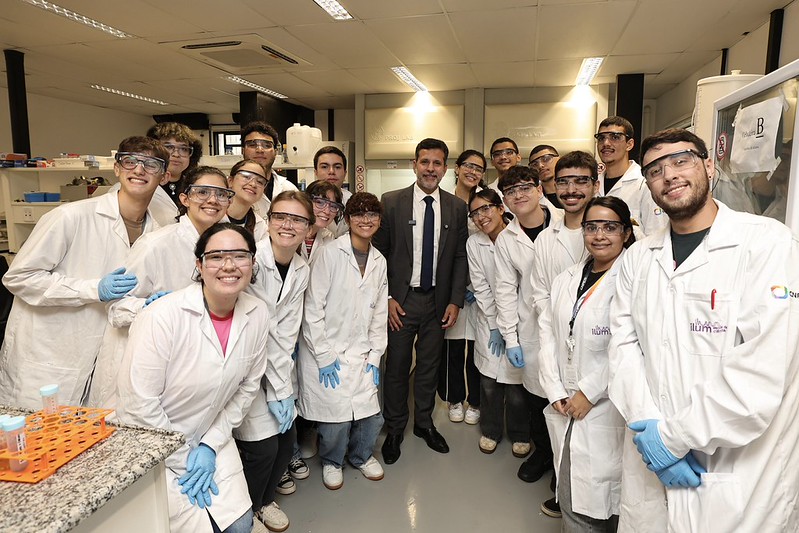
The visit of the Minister of Education, Leonardo Barchini, to the Ilum School of Science reinforced the recognition of the institution’s innovative model of interdisciplinary education, linked to CNPEM, the Brazilian Center for Research in Energy and Materials. During his visit to the School, the minister toured laboratories, talked with faculty and students, and highlighted the integration of theory and practice as a distinguishing feature of the undergraduate program.
According to Barchini, Ilum’s pedagogical approach is already inspiring other educational initiatives in the country. “It’s a true model that has already served as an inspiration for other schools that started here with Ilum. This training, combining theory and practice, is something students can only benefit from”, said the minister during a press conference at the end of the visit.
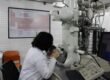
Accompanied by members of the Ministry of Education, including the Secretary of Higher Education, Marcus Vinícius David, the minister toured different areas of the School throughout the afternoon. The program included presentations on Ilum’s educational approach, visits to the laboratories of Life Sciences, Spectroscopy and Atomic Force Microscopy, In addition to meetings with professors and students from different classes of the Bachelor’s degree in Science and Technology.
One of the highlights of the visit was precisely the direct interaction with the students. By talking with young people from different regions of the country, Barchini emphasized their enthusiasm and commitment to scientific training. “What stands out most for me is the students’ enthusiasm. Many are away from home for the first time, but they say it’s well worth it because of the quality of education, what they are learning here, and the prospects for the future”, he highlighted.
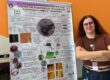
During his visit to Ilum, the minister also learned about projects developed by the students and observed practical demonstrations conducted by them in the school’s laboratories. The main objective of the visit was to gain a close understanding of how the interdisciplinary undergraduate program works, which combines practical activities, project development, and broad scientific training.
Barchini also highlighted the importance of interdisciplinary bachelor’s degrees for scientific education in Brazil. “The idea is for us to provide this more general education, preparing students for postgraduate studies, something that is very important to us”, he said.
Created to offer free, high-quality higher education in Science and Technology, Ilum’s distinguishing feature is its strong integration with CNPEM’s scientific infrastructure, allowing students to have direct contact with cutting-edge equipment and research activities from the first years of their undergraduate studies.
About the Ilum School of Science
Ilum offers a free undergraduate degree program that utilizes an interdisciplinary approach to train scientists and professionals in science and technology. With an innovative educational model, the three-year full-time bachelor program offers courses that connect life sciences, materials science, data science, artificial intelligence, and the humanities in order to prepare researchers to work in an ethical and collaborative manner in the search for solutions to the global challenges of the twenty-first century. The Ilum School of Science is funded by the Brazilian Ministry of Education (MEC) and is part of the Brazilian Center for Research in Energy and Materials (CNPEM) in Campinas, São Paulo, a social organization overseen by the Ministry of Science, Technology, and Innovation (MCTI). Ilum’s educational mission offers early contact with experimental activities, in teaching labs at the school as well as at CNPEM, in projects carried out together with researchers.
About CNPEM
The Brazilian Center for Research in Energy and Materials (CNPEM) is home to a state-of-the-art, multi-user and multidisciplinary scientific environment and works on different fronts within the Brazilian National System for Science, Technology and Innovation. A social organization overseen by the Ministry of Science, Technology and Innovation (MCTI), CNPEM is driven by research that impacts the areas of health, energy, renewable materials, and sustainability. It is responsible for Sirius, the largest assembly of scientific equipment constructed in the country, and is currently constructing Project Orion, a laboratory complex for advanced pathogen research. Highly specialized science and engineering teams, sophisticated infrastructure open to the scientific community, strategic lines of investigation, innovative projects involving the productive sector, and training for researchers and students are the pillars of this institution that is unique in Brazil and able to serve as a bridge between knowledge and innovation. CNPEM’s research and development activities are carried out through its four National Laboratories: Synchrotron Light (LNLS), Biosciences (LNBio), Nanotechnology (LNNano), Biorenewables (LNBR), as well as its Technology Unit (DAT) and the Ilum School of Science — an undergraduate program in Science and Technology supported by the Ministry of Education (MEC).