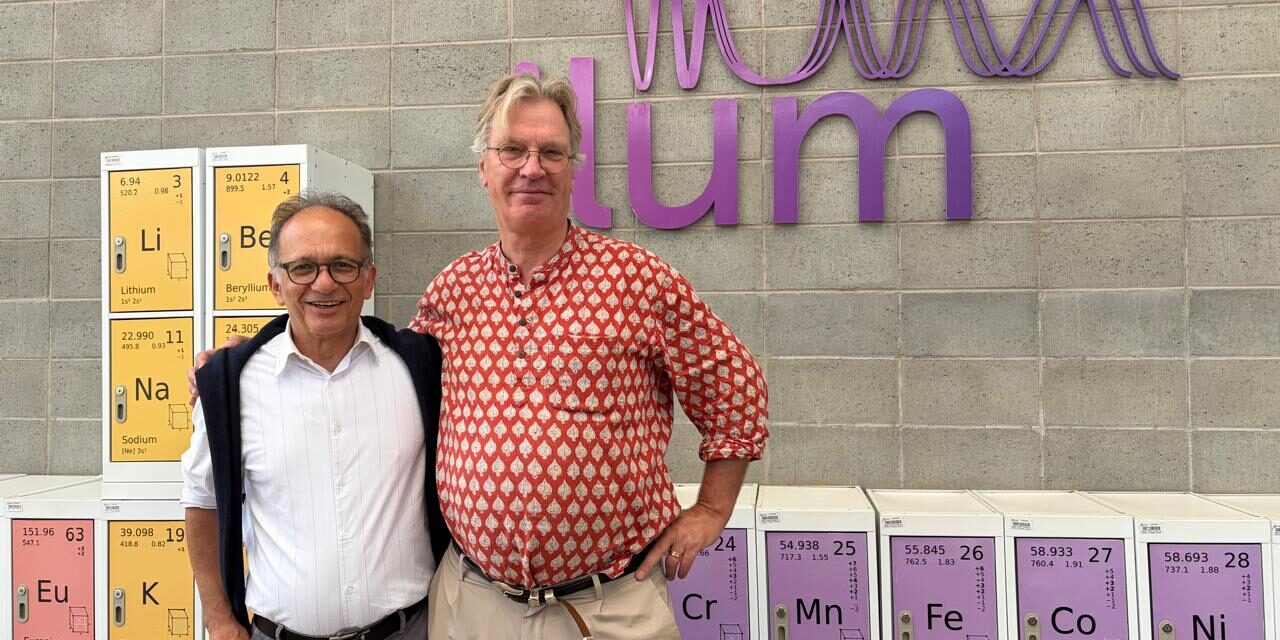
On November 16, the Brazilian Center for Research in Energy and Materials (CNPEM) received Olle Eriksson of the University of Uppsala in Sweden. The professor noted the international nature of CNPEM, the great potential of its facilities, and opportunities for collaboration with Brazilian scientists. Eriksson, who has participated in scientific efforts alongside Brazilian researchers for roughly 20 years, stressed the quality of the scientists with whom he worked. The presence of renowned figures in global science like Eriksson at CNPEM strengthens the Center’s global position and brings students and researchers closer to the people who help to guide the future of science.
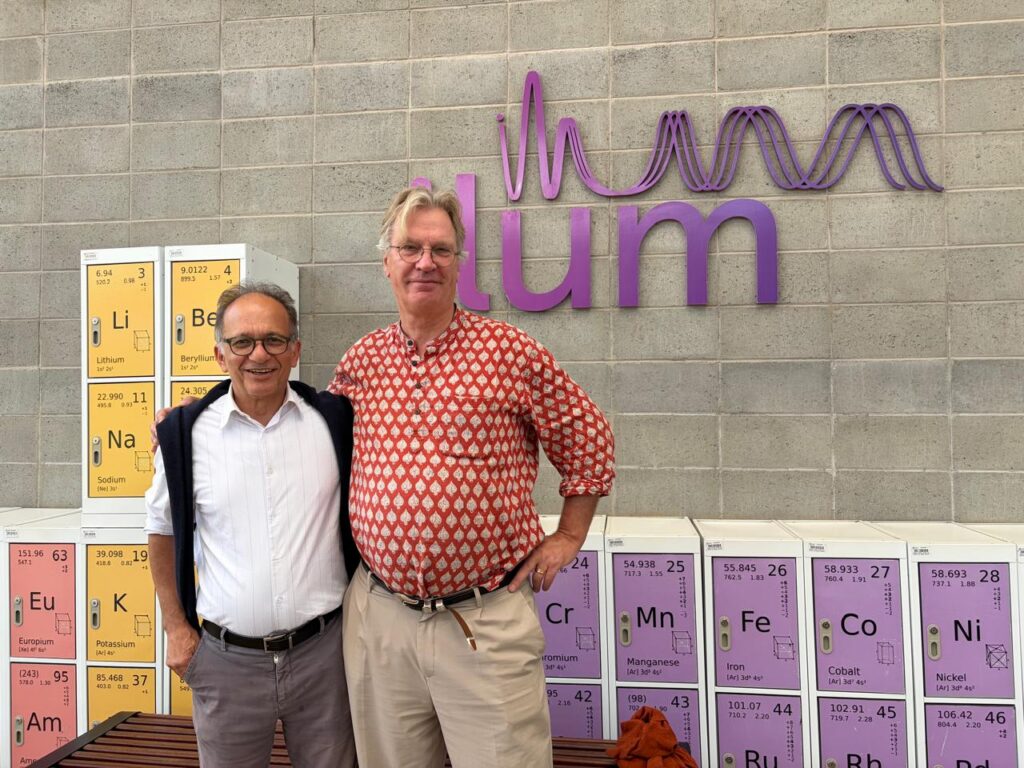
During his visit, Eriksson delivered a presentation to Ilum students and CNPEM researchers and collaborators entitled “Nobel Prize in Physics, the process of finding laureates” at the Ilum Learning Center on the CNPEM campus. In describing how laureates are selected, he advised young scientists to not simply follow what others are already doing but instead think outside the box and look for original topics.
Eriksson has been a professor of materials theory in the Department of Physics and Astronomy at Uppsala University since 2002. He has published approximately 700 peer-reviewed articles totaling over 30,000 citations, and is a reference in the electronic structure of magnetic materials. Eriksson is a vice-director of WISE, a research network on sustainable materials supported by the Knut Foundation and Alice Wallenberg. He is also a member of the Royal Swedish Academy of Sciences, and through this role he is part of the Nobel Committee for Physics, which is responsible for selecting candidates for the physics prize.
About the Ilum School of Science
Ilum offers a free undergraduate degree program that utilizes an interdisciplinary approach to train scientists and professionals in science and technology. With an innovative educational model, the three-year full-time bachelor program offers courses that connect life sciences, materials science, data science, artificial intelligence, and the humanities in order to prepare researchers to work in an ethical and collaborative manner in the search for solutions to the global challenges of the twenty-first century. The Ilum School of Science is funded by the Brazilian Ministry of Education (MEC) and is part of the Brazilian Center for Research in Energy and Materials (CNPEM) in Campinas, São Paulo, a social organization overseen by the Ministry of Science, Technology, and Innovation (MCTI). Ilum’s educational mission offers early contact with experimental activities, in teaching labs at the school as well as at CNPEM, in projects carried out together with researchers.
About CNPEM
The Brazilian Center for Research in Energy and Materials (CNPEM) is home to a state-of-the-art, multi-user and multidisciplinary scientific environment and works on different fronts within the Brazilian National System for Science, Technology and Innovation. A social organization overseen by the Ministry of Science, Technology and Innovation (MCTI), CNPEM is driven by research that impacts the areas of health, energy, renewable materials, and sustainability. It is responsible for Sirius, the largest assembly of scientific equipment constructed in the country, and is currently constructing Project Orion, a laboratory complex for advanced pathogen research. Highly specialized science and engineering teams, sophisticated infrastructure open to the scientific community, strategic lines of investigation, innovative projects involving the productive sector, and training for researchers and students are the pillars of this institution that is unique in Brazil and able to serve as a bridge between knowledge and innovation. CNPEM’s research and development activities are carried out through its four National Laboratories: Synchrotron Light (LNLS), Biosciences (LNBio), Nanotechnology (LNNano), Biorenewables (LNBR), as well as its Technology Unit (DAT) and the Ilum School of Science — an undergraduate program in Science and Technology supported by the Ministry of Education (MEC).